
Home > News > Industry News > Innovative Tire Recycling: Maximizing Efficiency with Diamond Wire Saw Technology
An endless diamond wire saw is the most effective tool for cutting up tires because it cuts the rubber, the steel belts and the textile cord in one cold pass — no melting, no heat-damaged rubber, no blades to resharpen. A loop cuts at 30–60 m/s with a kerf of only 0.35–0.5 mm, and it shears the steel cleanly instead of tearing it, so all three fractions of the tire stay separable and saleable rather than ending up as mixed shredder fluff.
Tires and rubber composites are normally cut with 1.0–3.5 mm endless diamond wire on a horizontal wire saw, running dry at a standard 35 m/s.
Cutting a tire means cutting three materials at once — flexible rubber, high-strength steel belts and textile cord — and that is exactly why most methods struggle. Shredder blades dull within hours, waterjet leaves a contaminated slurry, and thermal cutting burns the very rubber it is supposed to recycle. The diamond wire saw cuts all three cold, at 30–60 m/s, with a kerf of only 0.35–0.5 mm and no heat-affected zone. This guide answers how do you cut tires at industrial scale, why diamond wire is the best tool for cutting up tires, and what the recovered rubber, steel and fibre can actually be sold into.
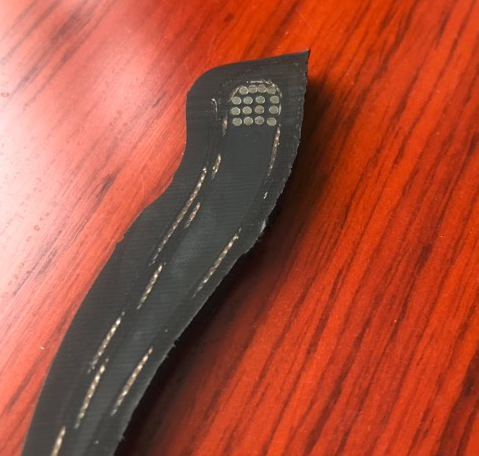
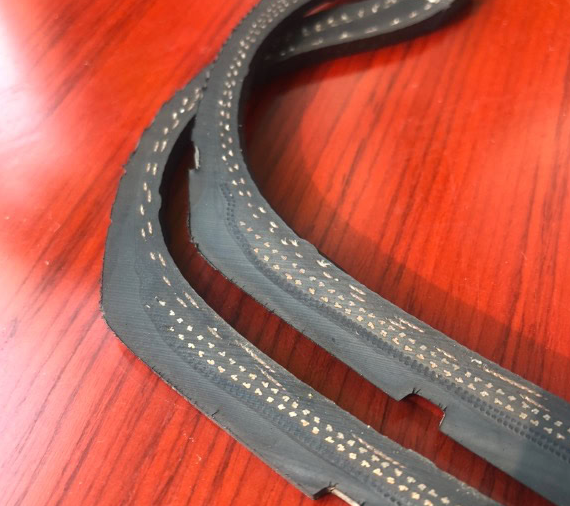
A tire is a masterpiece of composite engineering, designed to be incredibly durable and resistant to wear. This very durability, however, makes it a nightmare to dismantle. A typical tire consists of:
This combination of tough, flexible rubber embedded with high-strength steel makes tires resistant to conventional cutting methods. They blunt blades, resist tearing, and can melt under high heat, gumming up equipment. Simply put, not just any tool will do. The process of how to cut them effectively is the first and most crucial step in the recycling chain.
Over the years, several methods have been employed to tackle the problem of how do you cut tires, each with significant drawbacks:
These limitations highlight the urgent need for a cleaner, more efficient, and more economical solution. This is where diamond wire saw technology enters the picture.
A tire is a flexible composite, so the tool has to handle rubber and steel at the same time. These are the four methods recycling plants usually evaluate before moving to diamond wire.
| Method | Cut quality | Effect on rubber | Consumable & operating cost | Waste stream |
|---|---|---|---|---|
| Shearing / mechanical shredding | Inconsistent; ragged edges | Tears rather than cuts; some heat build-up | Steel cord dulls blades and hammers → frequent downtime | Mixed chips that are hard to sort |
| Waterjet | Clean cut | No heat damage | Very high energy use; high initial cost | Wastewater plus rubber slurry requiring treatment |
| Thermal (plasma / laser) | Clean cut | Degrades the rubber; produces fumes | Immense energy demand; safety controls required | Toxic fumes; lower-value material |
| Endless diamond wire | Clean, precise, repeatable | Cold cut — no heat-affected zone | Long wire life; lower energy than waterjet or thermal | Minimal dust; steel, rubber and fibre remain separable |
The transition to diamond wire saws represents a quantum leap in tire processing technology. It addresses nearly every shortcoming of previous methods, establishing itself as the modern best tool for cutting up tires. Here’s why:
Diamond, the hardest known natural material, effortlessly abrades through both the tough rubber matrix and the hardened steel cords within a tire. The continuous loop design of an endless diamond wire saw allows for uninterrupted cutting motion, significantly speeding up the processing time compared to stop-start methods. This results in a dramatically higher throughput, processing more tires per hour and reducing the overall cost per cut.
Diamond wire saws produce exceptionally clean and precise cuts. The kerf (the width of the cut) is narrow, minimizing material loss. This high level of precision is crucial for downstream recycling processes. Consistently sized chips and strips are easier to sort, clean, and feed into granulators or devulcanization machines. The clean cut also ensures the steel wire is sheared neatly, making it easier to separate and recover.
While the initial investment in a diamond wire cutting system can be substantial, the total cost of ownership is often lower. Diamond wires have a long operational life and require less frequent replacement than traditional blades. Coupled with lower energy consumption compared to waterjet or thermal systems and reduced downtime for blade changes, the long-term savings are significant. The efficiency gains from processing more material faster further enhance the return on investment.
This is a cold-cutting process. Unlike thermal methods, it generates no heat-affected zone, meaning there is no risk of burning the rubber or releasing harmful volatile organic compounds (VOCs) into the air. It also produces minimal dust compared to shredding, especially when equipped with water suppression systems. This creates a much safer and healthier environment for operators and aligns with strict environmental regulations.
Modern horizontal diamond wire cutting machinery is highly adaptable. It can be programmed to make precise cuts of varying depths and patterns, handling everything from passenger car tires to massive off-the-road (OTR) truck and mining tires. This process can be heavily automated, with tires being loaded, positioned, cut, and unloaded with minimal human intervention, boosting both safety and consistency.
The wire specification decides whether the cut runs clean or gums up. These are the values our application engineers work to for tire and rubber-composite cutting.
| Parameter | Typical value for tire cutting |
|---|---|
| Wire diameter | 1.0 – 3.5 mm |
| Coating pattern | Semi-coated (supports dry cutting); section-coated where larger chip space is needed for rubber debris |
| Linear speed | 30 – 60 m/s (standard 35 m/s) |
| Working tension | 140 – 250 N |
| Kerf width | 0.35 – 0.5 mm |
| Cooling | Dry cutting is typical; water suppression optional for dust control |
| Loop circumference | Custom, matched to your pulley geometry |
Once a tire is cleanly and efficiently cut using a diamond wire saw, its components can be separated and transformed into valuable commodities, creating a circular economy.
The precision of the endless diamond wire ensures a clean cut that does not degrade the material’s inherent properties. This results in rubber chips with minimal heat damage and a consistent geometric size, which is critical for advanced manufacturing processes.
The precision cutting action of the diamond wire shears through steel cords with a clean edge, rather than pulling and fraying them. This is a game-changer for material recovery.
The ability to produce a clean, predictable material opens doors for innovation that shredded tire products cannot enter.
The endless diamond wire saw does not just cut tires; it meticulously deconstructs them. This precision is the key that upgrades tire recycling from a volume-based waste management operation to a value-driven material recovery industry. By preserving the integrity of the materials, it unlocks sophisticated applications, drives innovation, and creates a more economically sustainable and environmentally responsible path for end-of-life tires.
Q1: How do you cut a tire for recycling?
The tire is cut cold on an endless diamond wire saw. The loop travels in one direction at 30–60 m/s and its diamond grit abrades through rubber and steel cord together, so the tire is divided into strips or blocks without melting the rubber or fraying the steel. Those pieces then feed granulators, devulcanisation lines or steel-recovery equipment.
Q2: Can a diamond wire saw cut through the steel belts inside a tire?
Yes. Diamond is harder than the steel cord, so the wire cuts the belt instead of pulling at it. Because the cord is sheared cleanly rather than torn, the recovered steel comes out cleaner and less oxidised — which is what lets it command a better price at the furnace.
Q3: Is diamond wire tire cutting a dry or a wet process?
Both are possible. Dry cutting is common in tire recycling and keeps the rubber dry for downstream processing; a water suppression system is added where dust control is required. Either way the cut is cold, so there is no heat-affected zone and none of the VOC release that thermal cutting produces.
Q4: What wire diameter and coating are used for tire cutting?
Tires and other rubber composites normally use 1.0–3.5 mm endless diamond wire. Widths above about 1.5 mm are usually section-coated, because the interrupted diamond pattern provides the larger chip space needed to clear rubber debris during a dry cut.
Q5: How does diamond wire cutting change the value of the recovered material?
It keeps the three fractions separable. The precise cut produces consistently sized rubber chips with minimal heat damage, shears the steel cleanly for high-value recovery, and makes fibre separation from the rubber matrix more feasible — which is what turns tire processing from volume-based disposal into material recovery.
Ensoll Tools offers free test cutting: send us a tire section or rubber-composite sample and we return the cut part with surface-quality data, throughput observations and a wire-life estimate — so you can size a tire cutting line on evidence rather than on a datasheet. Tell us the tire type (passenger, truck or OTR), the target piece size and your hourly volume, and our engineers will recommend the wire diameter, coating pattern and machine format. Call +86-19937798228 or send your sample details through the contact page.
If you have any question, please contact us